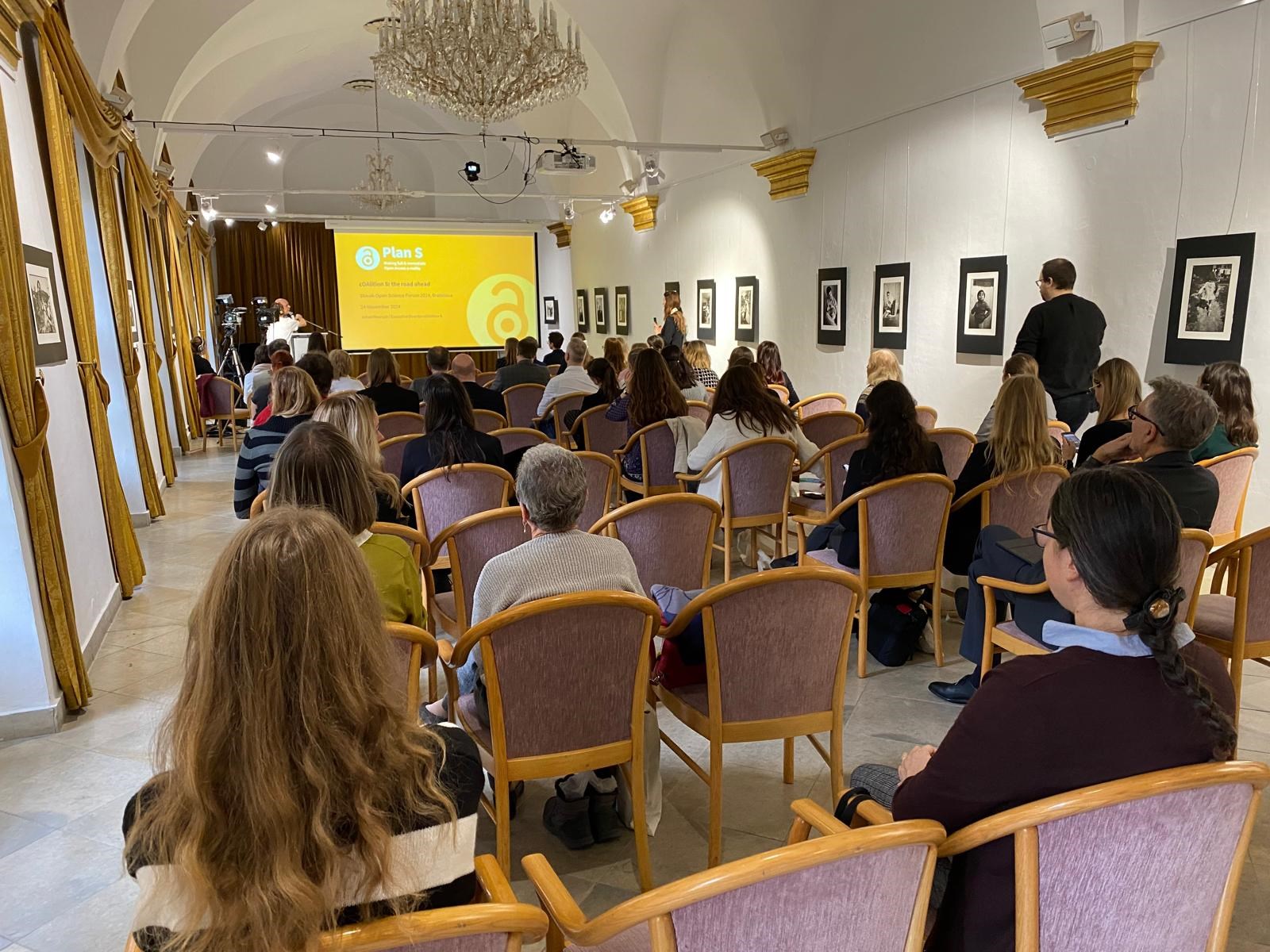
The forum provided a unique opportunity for networking among experts, academics, and the general public, opening up space for discussions on the current challenges and the future of open science. Attendees had the chance to listen to a wide array of presentations by renowned experts from various fields. Johan Rooryck from the cOAlition S initiative discussed ongoing activities in the field of open science, Laetitia Bracco focused on the French national plan and monitoring system for open science, and Sándor Soós addressed the relationship between open access and bibliometrics.
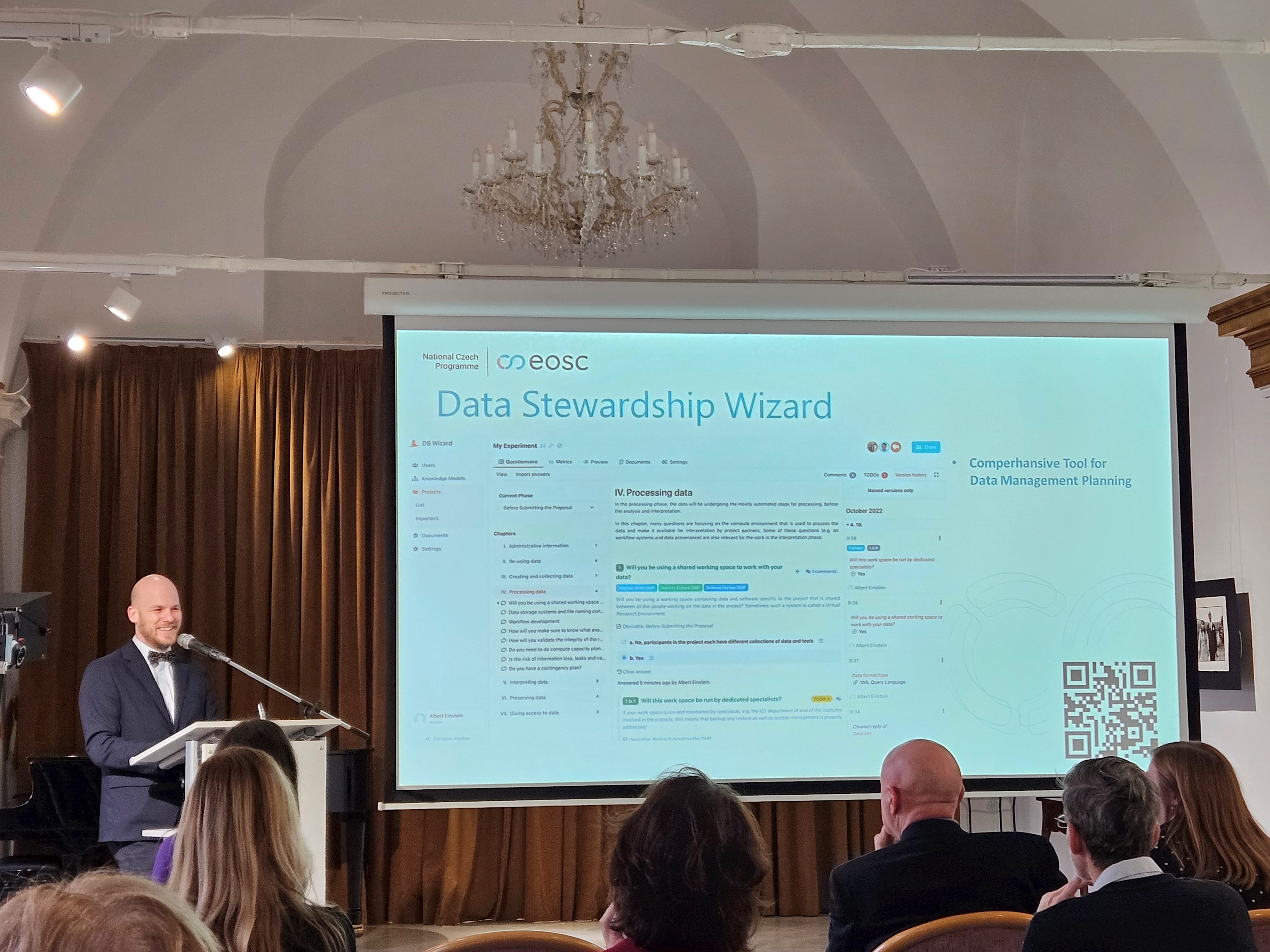
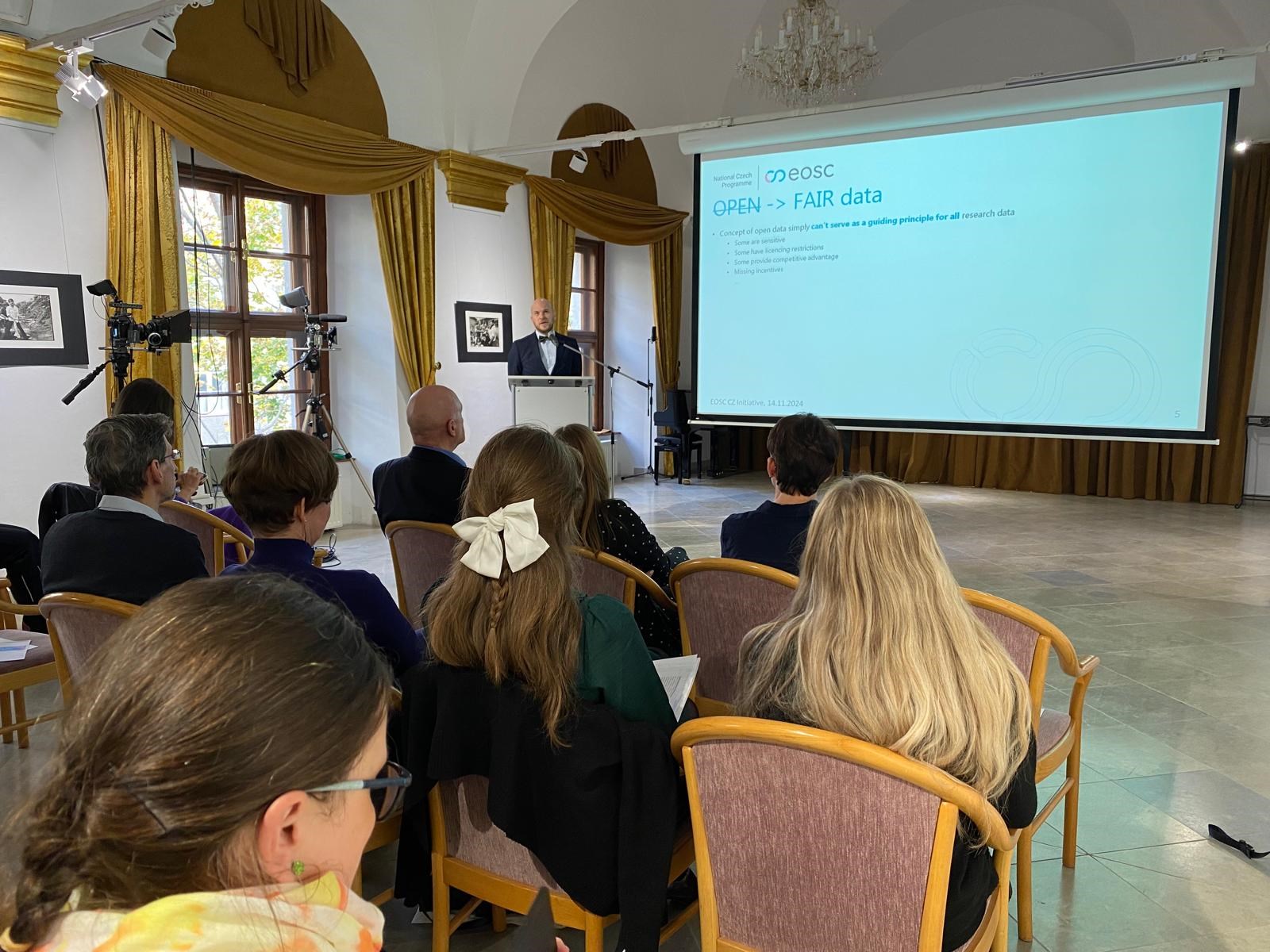
Among the speakers was Matej Antol, the lead manager of the IPs EOSC-CZ project, who presented the EOSC CZ initiative and the development of the Czech National Data Infrastructure (NDI) for FAIR (Findable, Accessible, Interoperable, Reusable) research data, as well as the potential of the initiative to enhance Czech research and foster closer integration with European science. "The Slovak Open Science Forum was a very enjoyable and inspiring conference. I am pleased that our colleagues in Slovakia are actively working towards advancing responsible science, and that many interesting Slovak and international guests attended this forum," stated Antol.
Lenka Sedlačková, Secretary of EOSC CZ, also participated in the forum and gave a highly positive evaluation of the event: “The Slovak Open Science Forum was an excellent opportunity to learn how experts from various science-related professions approach the openness of science—ranging from policymakers and scientists to librarians and publishers. I am delighted that the concept of FAIRification is widely embraced not only in Western countries but also in our Central European region,” commented Sedlačková.
The Slovak Open Science Forum supported international collaboration and highlighted the growing significance of open science, offering new opportunities for sharing scientific knowledge. The conference helped advance the open scientific ecosystem in Slovakia and contributed to its further integration with Europe.