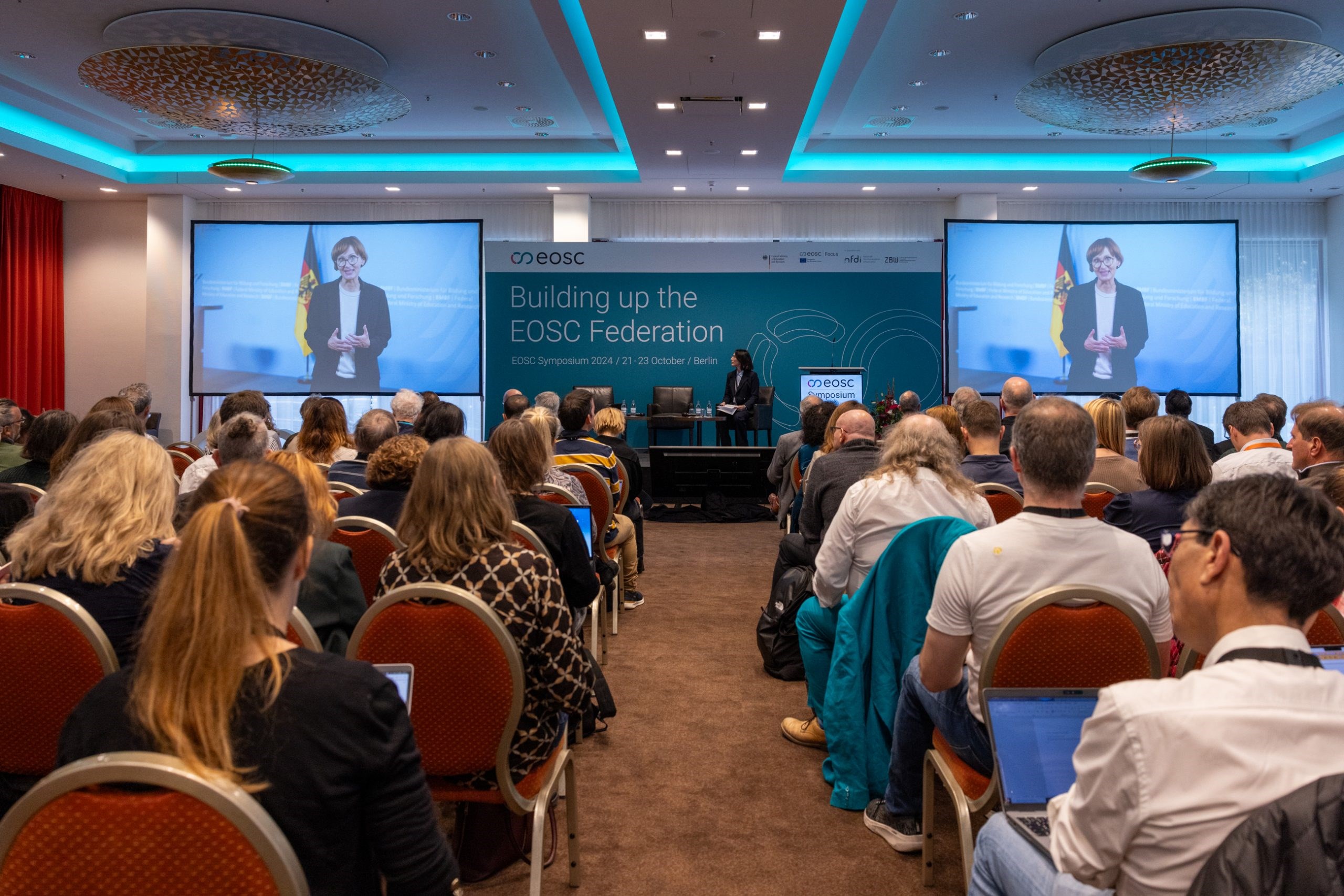
The building and development of the EOSC Federation was one of the main topics of the symposium. Here, new opportunities for interoperability and research data sharing between national and disciplinary institutions were presented. Subsequent panel discussions also addressed issues of national nodes' involvement in the federation, including technical, organizational and financial challenges.
The Czech Republic was represented by Marek Cebecauer from the Czech Academy of Sciences who talked about the importance of EOSC nodes in integrating specific services for the research community into the broader EOSC ecosystem, emphasizing the need for technical and organizational readiness for effective federation. In addition to his presentation, he participated in a panel discussing different approaches to developing EOSC nodes in diverse scientific domains.
Another Czech representative, Luděk Matyska from Masaryk University and CESNET, contributed to a panel discussion focused on EOSC federation readiness from the perspective of various stakeholders. Representatives of the Czech Republic also participated in other discussions where, for example, Jiří Marek, Head of the EOSC CZ Secretariat, discussed interoperability issues within the EOSC federation.
The symposium also included presentations on the development of AI and common European data spaces, such as the European Health Data Space, where the potential for secondary use of health data in research was presented. Czech representative Petr Holub from Masaryk University spoke as co-chair of the Health Data Task Force.
In the final summary of the symposium, Ute Gunsenheimer, Secretary General of the EOSC Association, stressed that the building of the EOSC Federation represents a major step towards the creation of a fully operational scientific infrastructure for Europe that will facilitate the exchange and sharing of data. A system for involving additional EOSC nodes is currently being prepared, with more than 120 organisations having already expressed interest.