Long Live Research Data: The National EOSC CZ 2025 Conference Brought the Latest Topics in Research Data Management and Sharing to Ostrava
Ostrava, 2–3 December 2025 – The city of Ostrava hosted another edition of the National EOSC CZ Conference under the title Long Live Research Data. The two-day event brought together more than 100 experts from universities, research organizations, data centers, libraries, funding agencies, and public institutions.
The program offered plenary sessions, panel discussions, and hands-on workshops focused on current challenges in research data management, sharing, and reuse. Tomáš Kozubek opened the conference from IT4Innovations at VŠB – Technical University of Ostrava, who welcomed participants and introduced new services and infrastructure of the national supercomputing center.

From Data Management to Skills Development
The first day of the conference focused on three main thematic tracks: Tools for Data Management, Stories of Data (Re-)Use, and Advancing Data Skills. The opening presentation, Research Data in the Czech Republic, was delivered by Matej Antol, Executive Manager of the IPs EOSC-CZ, who summarized the current state and future directions of research data management in the Czech Republic.
Tools for Data Management
The keynote lecture was given by Petr Knoth (The Open University, UK), who emphasized the role of institutions in managing research outputs: “Institutions should take responsibility for managing and preserving the research outputs produced by their academics. They should also make at least the metadata of these outputs openly available to the wider world in a machine-readable format through their repository systems. This will help ensure the long-term openness and FAIRness of their research outputs, and keep the open scholarly ecosystem decentralised, and therefore resilient against third-party monopolies.” Knoth stated.
Subsequent presentations showcased practical examples from Czech research organizations. Petra Černohlávková (National Library of Technology) highlighted the crucial importance of persistent identifiers (PIDs): “Without PIDs and associated metadata, research loses its findability and visibility. It’s a small but crucial step toward fair and efficient sharing of research data,” she explained.
Jan Fousek (CEITEC Masaryk University) presented the development of multimodal repositories for imaging and physiological data, Antonín Fejfar (Institute of Physics, Czech Academy of Sciences) discussed the OneData platform, and Illyria Brejchová (Institute of Computer Science, Masaryk University) shared experiences integrating repositories into user-oriented systems.
Stories of Data (Re-)Use
In the second thematic block, Martin Komenda (Institute of Health Information and Statistics of the Czech Republic) focused on data stories from the National Health Information System, the formats used for their sharing, and their broader social impact: “Data are stories about the health of a society. Their responsible sharing and correct interpretation help us better understand public health, improve navigation within the entire healthcare system, and strengthen trust in science and research,” said Komenda.
The panel then presented examples of data reuse across disciplines – from biomedicine to informatics. Jaroslav Oľha (Faculty of Medicine, Masaryk University) demonstrated the reuse of RNA sequencing data, Monika Čechová (Faculty of Informatics, Masaryk University) shared insights from computer science, and Marek Cebecauer (J. Heyrovský Institute of Physical Chemistry, Czech Academy of Sciences) introduced automation tools that accelerate data sharing.
Advancing Data Skills
The final keynote was delivered by Ladislav Krištoufek, Vice-Rector for Research at Charles University, who spoke about the changing research environment and the need for new competencies in his lecture Data Matters – and Data Matter: “Today’s research requires not only data, but also the ability to work with them — in teams, across disciplines, and in line with the principles of reproducibility. Not everyone needs to master everything, but everyone must understand that research is a team effort,” emphasized Krištoufek.
The following presentations shared experiences with the training and certification of data stewards from universities in Vienna and Prague. Michael Feichtinger (University of Vienna) and Jan Dvořák (Faculty of Arts, Charles University) introduced new educational programs focused on developing competencies in research data management. Jan Vališ (National Library of Technology) demonstrated how skills in research data and open science can be systematically strengthened. Georgia Koutentaki (Faculty of Information Technology, Czech Technical University in Prague) highlighted the role of data stewards in academic education.
Discussion on Skills and Research Generations
In a panel discussion moderated by Matej Antol, participants agreed that successful research data management requires not only new tools, but also a change in researchers’ mindset. “Many problems in working with data arise because researchers often don’t even fully understand what data they are working with. The key is to learn how to interpret and describe data properly,” was one of the reflections shared during the discussion.
The panelists also emphasized that technical tools alone are not enough. The future of research, they agreed, depends on systematic thinking, precise documentation, and open communication. Data stewards, they noted, demonstrate that success in this field is not only about technical expertise, but also about soft skills – the ability to communicate, empathize, and listen.
The session concluded with a call for stronger institutional support. “Data stewards can offer assistance, but if the institution itself does not make a commitment and create a supportive environment, their efforts will remain ineffective,” summarized Georgia Koutentaki.
Practical Workshops and Poster Session
The second day of the conference was dedicated to practical workshops. Participants in the Young Researchers track focused on FAIR principles, metadata management, and the use of services within the national data infrastructure. In parallel, the Repo Builders track addressed repository development, legal and licensing issues, and the use of tools such as Dataspecer and Persistent Identifiers (PIDs).
During the Poster Session, the expert jury selected the three best projects. The Best Poster Award went to poster no. 8 by Radovan Tomášik, Ivan Mahút, and Simona Menšíková, titled “Privacy-Preserving Data Quality Assessment for Federated Health Data Networks.” The winning contribution impressed the jury with its innovative approach to assessing the quality of health data in decentralized networks while maintaining data privacy.
Award Ceremony for the Poster Session Winners


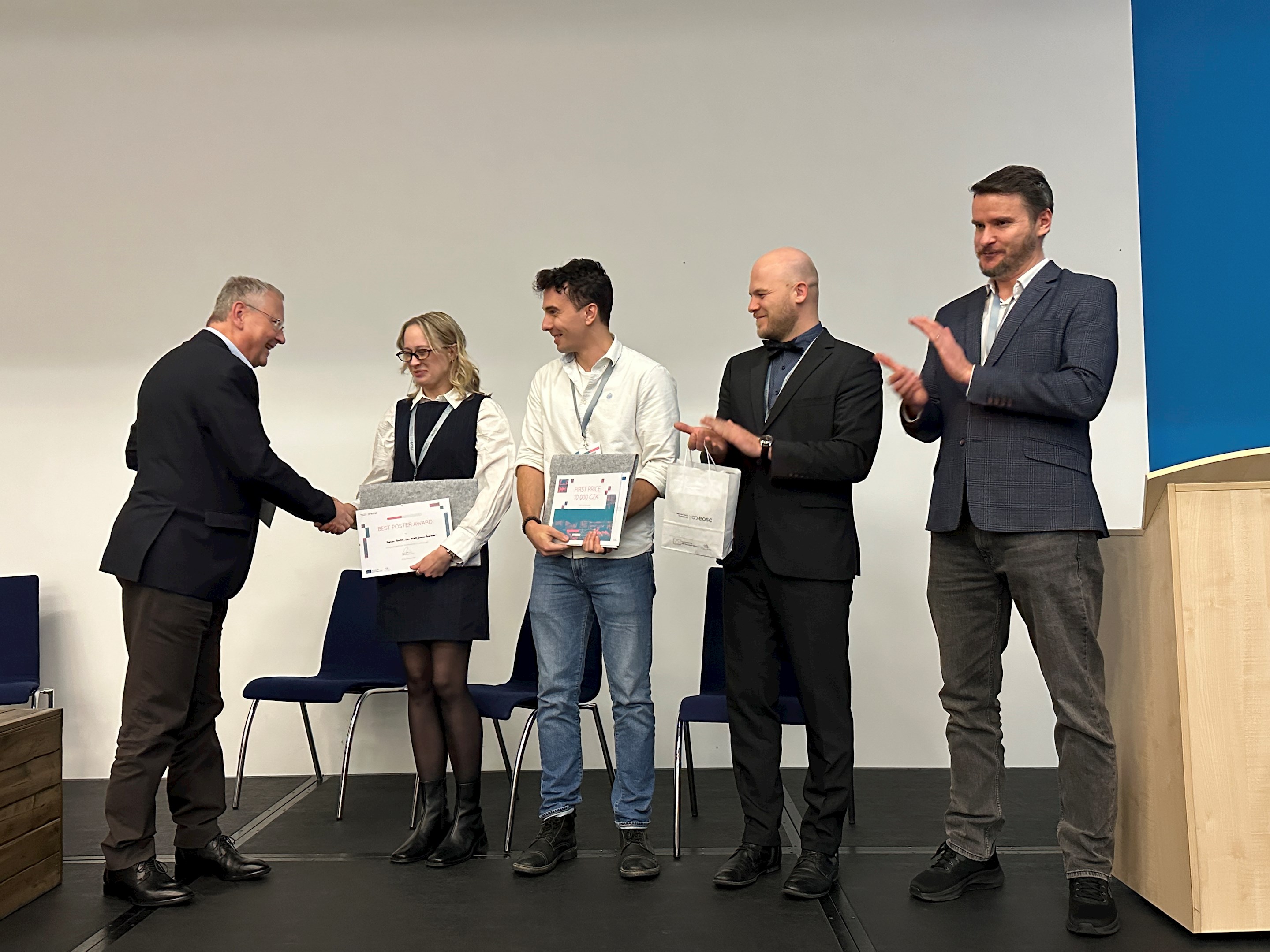

Photo: Secretariat EOSC CZ
Conclusion
The National EOSC CZ 2025 Conference reaffirmed the growing importance of open science and the emphasis on high-quality research data management in the Czech research environment. “Data management and sharing are no longer peripheral issues; they are the foundation of credible and effective research,” concluded the closing session.
The event was organized by the EOSC CZ team, comprising representatives from Masaryk University, IT4Innovations (VŠB–Technical University of Ostrava), and CESNET.
The full program, speaker presentations, and video recording of the conference will be available on the conference website.
Photogallery


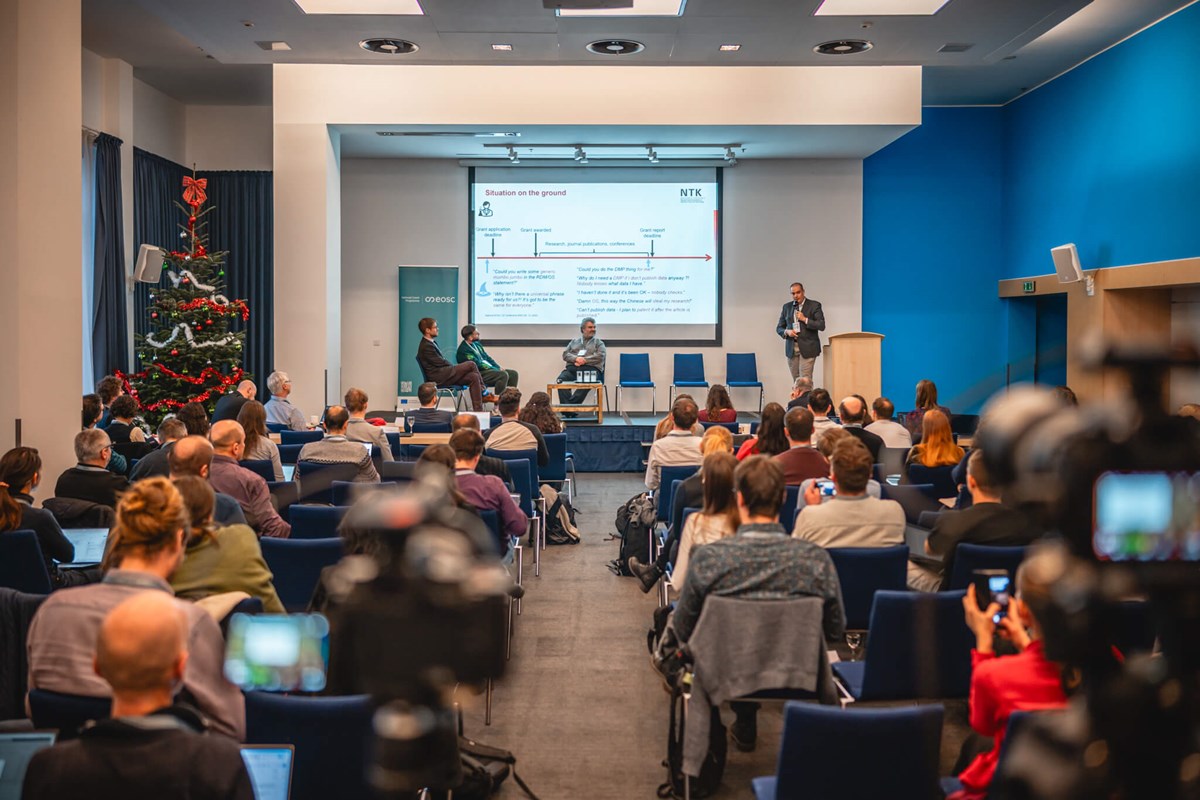


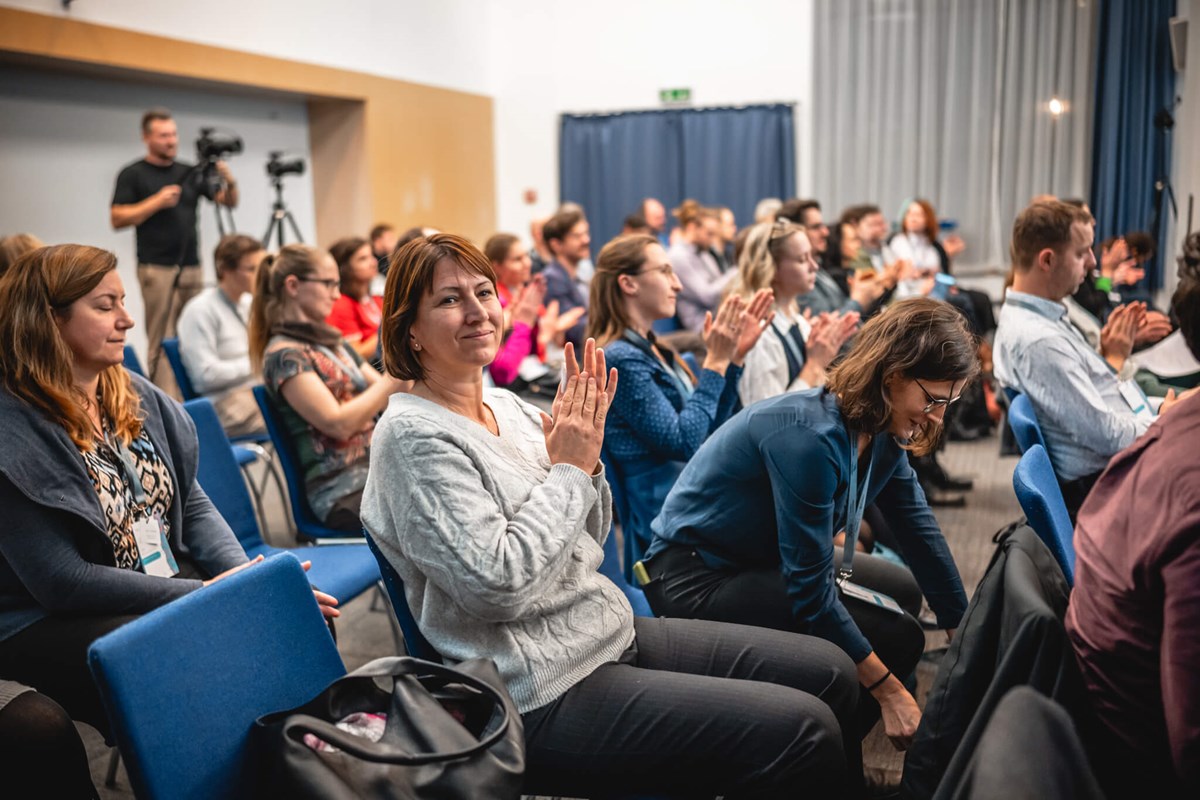


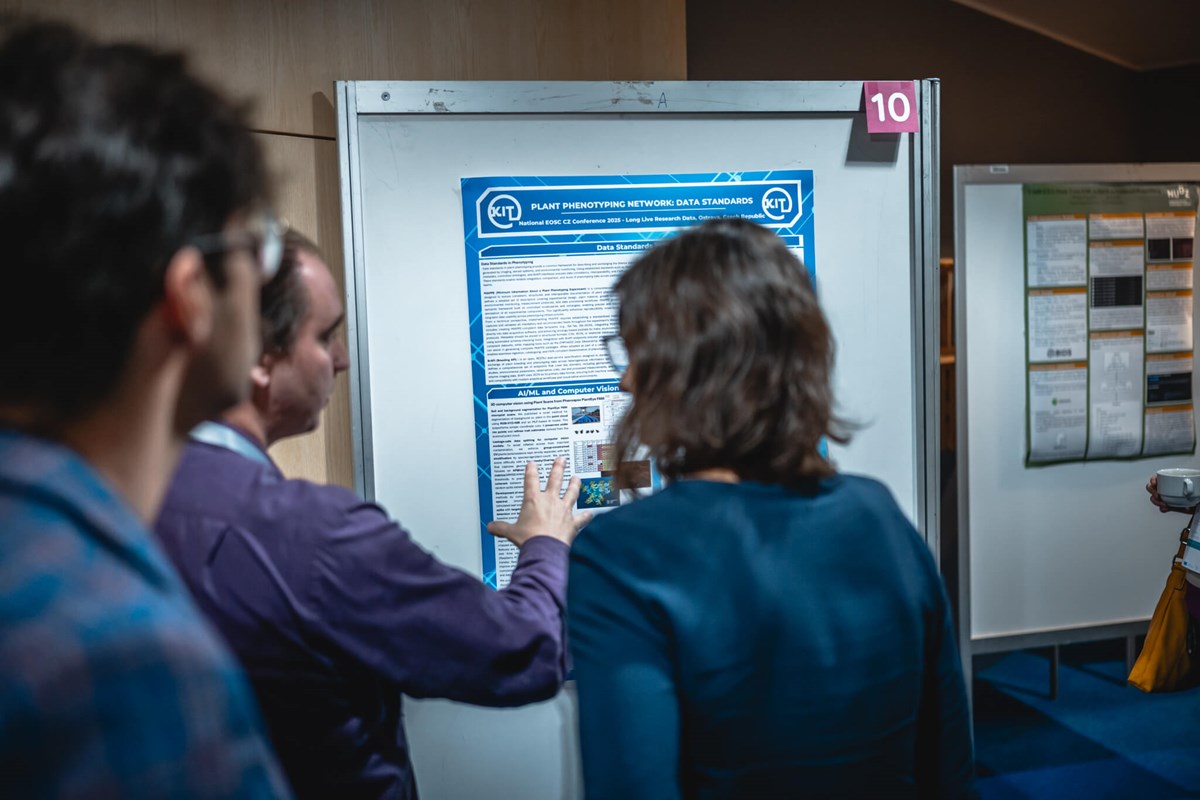
Photo: Lejla Ellis
More articles
-

Data Stewardship Wizard: A Smart Assistant for Research Data Management
Planning how to manage research data does not have to mean writing long documents based on rigid guidelines and templates. Data Stewardship Wizard is an online tool that guides you through the entire research data management process, step by step and in a clear, user-friendly way, without unnecessary administrative burden.
-

“Without public trust, it won’t work,” Zdenka Dudová talks about the future of health data
Health data are among the most sensitive, but also the most valuable sources for research. How will the European Health Data Space (EHDS) change access to these data, and what does it mean for Czech institutions? We discussed these topics with Zdenka Dudová from Masaryk University, who has long been involved in international projects in the field of health data and leads the Sensitive Data working group of the EOSC CZ initiative.

